

Warden: Appropriate procedure was followed
By Donna J. Miller
Cleveland Plain Dealer
Texas jail in-custody death under investigation
Death of jailed NJ woman still unexplained
CLEVELAND, Ohio — R&B singer Sean Levert entered the Cuyahoga County Jail on March 24, clutching the prescribed medication he took three times a day for anxiety.
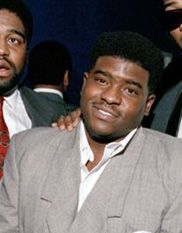 Sean LeVert is seen in this May 15, 1989 file photo. (AP Photo/Dave A. Cantor) |
Jail staff took the bottle of Xanax from him and failed to give him a single pill during the six days he was there, investigators said. When he told jail officials he needed the prescription medication, Levert, 39, was told he would have to wait nearly two weeks to see a doctor who would decide if he would get the pills.
He never saw the doctor. Instead, on March 30, jailers strapped Levert into a restraint chair, as he was fighting the monstrous visions in his head caused by withdrawal from the medication. Minutes later, the son of O’Jays star Eddie Levert stopped breathing. Doctors could not revive him.
Details about Levert’s last six days are laid out in recently released Cuyahoga County investigators’ reports, interviews and a Cuyahoga County coroner’s report. Collectively, they paint a horrifying picture in which an inmate shrieked delusionally for more than 24 hours before collapsing in the overcrowded jail.
The death shook jail staff, according to the reports, and left at least one worker feeling guilty. No workers were disciplined following the death.
The Bureau of Justice Statistics does not have figures for how many inmates have died in the Cuyahoga County Jail.
Jail supervisors did not return repeated calls seeking comment Tuesday.
Jail Warden Kevin McDonough said the day after Levert’s death that jail staff followed appropriate procedures. The Cuyahoga County prosecutor reviewed the case and found that no laws were broken.
Levert’s widow filed a wrongful-death suit in federal court in June.
According to the investigators’ and coroner’s reports and interviews, this is what occurred:
On March 24, Levert was sentenced to nearly two years in prison for owing about $91,000 to three children he fathered before marrying 13 years ago. Levert surrendered a bottle of Xanax during booking. He took 2-milligram pills three times a day.
Levert and another inmate shared a cell built for one person. Levert was supposed to sleep on a mattress on the floor. He couldn’t sleep that way, he said, so for three nights he tried to sleep sitting with his back against a wall, according to the reports.
On March 27, Levert told a corrections officer that he needed his medication. The officer contacted a nurse who said Levert would have to “wait like everyone else” to see a doctor. He was scheduled to see a doctor nearly two weeks later, on April 8.
The jail’s manager of health care services, Christine Dubber, told investigators after the death that Levert’s Xanax was taken because anxiety was not considered an urgent problem, like psychosis, schizophrenia or suicidal thoughts.
William Naber, an expert in corrections practices and law enforcement procedures, said it is standard practice for prisoners entering a jail with medication to undergo screening at the time of entry.
“That to me would be a priority of medical clearance,” he said. “Withdrawal complications from Xanax are well known.”
Naber, a retired captain from the Sonoma County (Calif.) Sheriff’s Office, said it is “extremely unusual for an inmate to go almost a week without prescription medication.
“That’s a medical malpractice issue, not a correctional issue,” he said.
The evening of March 29 marked the start of Levert’s delusions.
That night, Levert told his cellmate he heard a woman screaming outside the jail. He said she was threatening to kill a corrections officer. The cellmate told Levert he couldn’t hear a woman screaming.
About 3:30 a.m. March 30, Levert told the cellmate he could hear his wife. She was telling him that their son just fell into the pool.
Levert became fearful and pushed a call button to summon a corrections officer. A short time later, a corrections officer and a nurse came to Levert’s cell. He was crying.
They took him to a pod of cells reserved for inmates with mental health problems. He was not given his medication.
At 7:45 p.m. March 30, Levert told a sergeant that he had just seen a bad car crash. The sergeant reported the “hallucinative and delusional behavior” to a nurse, who took no action, according to the reports. Levert was pacing in his cell, acting bizarrely and yelling that his mother and his son were being killed.
Jail supervisor Michael McClelland allowed Levert to call his mother, but she didn’t answer the phone. McClelland wrote in a report that a doctor would see Levert the next day.
Three hours later, Levert began shouting and pounding on the cell floor.
McClelland said Levert sounded like “there were three pitbulls in the room and he was fighting them off.”
McClelland opened the cell door. Levert “shot into my arms. He didn’t put up a fight,” McClelland said. Levert was handcuffed and strapped into a restraint chair to prevent him from injuring himself.
In a videotape of Levert being placed in the chair, he repeatedly shouted, “No, no, no” and strained against the straps, but didn’t fight the jailers. His breathing was labored. With his eyes squeezed shut, he shouted, “She did it. She did it. She killed my mother.” He stopped shouting at 10:57 p.m., seemingly out of breath. Then the video camera was turned off.
Nurse Jane Lawrence checked to make sure the restraint straps around Levert’s wrists, ankles and shoulders weren’t too tight. The nurse called the jail’s psychiatrist, described Levert’s condition and told the doctor Levert had previously been taking Xanax.
She was told to give Levert an injection that contained three drugs, Benadryl, Ativan and Haldol, to calm him.
The nurse told McClelland she wanted to know more about Levert’s medical history before she gave him the shot. She called Levert’s mother.
The reports show she and McClelland spoke to Levert’s mother for five to seven minutes.
McClelland assured Martha Levert, “Your son is fine. He’s not in any danger of hurting himself or anybody else. Yes, we have him restrained right now because he lost his cool in that cell quite a bit. He just went a little wild. We can’t allow him to hurt himself, but he’s safe right now and we’ll be watching him very closely tonight.”
McClelland hung up the phone and went to check on Levert, who was no longer shouting. He found Levert not breathing.
Paramedics already entering the jail on an unrelated call were instead sent to Levert. His heart stopped beating on the way to St. Vincent Charity Hospital. He arrived at 11:42 p.m. Doctors tried to restart his heart, but pronounced him dead at 11:57 p.m. March 30.
Cuyahoga County Coroner Frank Miller ruled Levert died of complications of sarcoidosis, high blood pressure, heart disease, diabetes and withdrawal from Xanax.
Miller said withdrawal from Xanax is severe and can cause biological symptoms as well as panic, anxiety, emotional instability and hallucinations.
In a taped interview, McClelland told investigators, “The guilt has just been overwhelming. I want to tell [Levert’s mother] how sorry I am that that happened.”
Levert’s family could not be reached for comment Tuesday night.
Plain Dealer reporter Sarena McRae contributed to this story. To reach this Plain Dealer reporter: djmiller@plaind.com, 216-999-4852
Copyright 2008 Plain Dealer Publishing Co.