


Lauren Girgis
The Seattle Times
SEATTLE — A new legislative audit on Washington’s juvenile rehabilitation system describes youth prisons that are contending with relentless staff turnover and overcrowded facilities.
According to the audit, released this month, nearly half of front-line staff leave within one year. That number was worst at the maximum-security Green Hill School in Chehalis, where 55% of security officers left within a year.
There is also churn at the top: The division managing juvenile rehabilitation has had four leaders since 2020. Green Hill has seen three supervisors and Echo Glen has seen nine in the same time period.
Turnover was just one of the issues highlighted by the Joint Legislative Audit and Review Committee, which identified staggering if evident systemic issues that may be stunting rehabilitation at the state’s youth prisons.
In a statement, the Department of Children, Youth and Families said the bulk of the information collected for the audit was in 2024 and 2025, the height of overcrowding. DCYF oversees the state’s juvenile rehabilitation system and its facilities.
“The report reinforces the agency’s position that operating above capacity is unsafe for both young people and staff,” the statement said.
The audit focused on Green Hill School and its medium-maximum security counterpart, Echo Glen Children’s Center in Snoqualmie. The two facilities house about three-quarters of the state’s incarcerated youth, with the remaining 25% in smaller county-level homes. The audit said smaller facilities are more conducive to juvenile rehabilitation overall, and Washington’s choice to focus on two large facilities bucks the national trend toward smaller youth detention lockups.
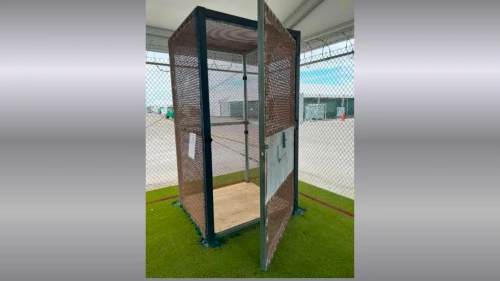
Green Hill has seen intense scrutiny. The youth prison reached precarious levels of overcrowding in 2024 and the Washington Court of Appeals ruled last year that the facility violated state law. Boys and men were locked in their cells for hours at a time, forced to urinate in plastic bottles after not being let out to use the bathroom, according to a personal restraint petition.
Mike Yestramski, president of the Washington Federation of State Employees, said he was “not at all” surprised by the findings.
“It pretty much confirmed everything that we’ve been saying for years,” Yestramski said. “When you have these facilities and you’re overcrowding them, bad things happen.”
JR to 25
In 2018 and 2019, the Legislature passed a series of laws collectively known as JR to 25 that allowed young people convicted of crimes they committed as children to stay in juvenile rehabilitation until they’re 25.
The audit identified sea-level changes in the youth population: About 25% of people incarcerated at youth prisons are serving an adult sentence, up from 11% in 2018.
Because the average sentence length has increased, it’s left fewer open beds in both facilities. Compared with other states’ juvenile justice systems, people in Green Hill and Echo Glen have committed more serious and violent offenses, the audit said.
In Washington, about two-thirds of young people in juvenile rehabilitation had committed a violent offense like homicide, violent sexual assault, robbery or aggravated assault. That rate is double the national average of 34%.
Casey Radostitz, the audit team project coordinator, said the team was “not able to draw any causal relationships” between JR to 25 and the issues identified in the audit.
“There are a lot of things that are going on in between,” Radostitz said during a report briefing to a legislative committee. “JR transferred agencies, there was a facility that was closed, there was a pandemic.”
Sen. Keith Wagoner, R- Sedro Woolley, questioned whether adults at the youth prisons should be moved to adult prisons. DCYF Secretary Tana Senn responded: “I would defer to the Legislature. We implement the laws that you pass.”
Senn noted Washington is the only state in the country with JR to 25. “We are charting new territory.”
A final report by the Washington State Institute for Public Policy analyzing the impacts of JR to 25 is due in 2031.
Assaults and overcrowding
The number of incidents — including assaults and possession of contraband — more than quadrupled at Green Hill and doubled at Echo Glen between 2022 and 2024, the audit found.
Employees interviewed for the audit said they were not adequately prepared to handle assaults, and auditors found DCYF does not provide clear instruction for how staff should intervene in fights when they occur.
According to the audit, the department’s assessments of a young person’s risk and whether they would get arrested again are not valid — meaning the assessments are not properly statistically tested to confirm that they accurately predict outcomes. As a result, young people could be in less or more restrictive placements than they should be.
Auditors also found evidence of disparate treatment. Residents of color are more likely to be confined to their rooms than white residents at Green Hill, and young women in secure confinement have no access to higher education because it’s not offered at Echo Glen, where all women and girls in juvenile rehabilitation are housed.
Green Hill has capacity for 180 beds. The population peaked at around 240 in June 2024 and has since stabilized at around 200.
An average of 19 people are housed at Harbor Heights, a new facility near Aberdeen that was opened last year to help relieve overcrowding.
“It’s still pretty new, so it’s hard to really gauge how much difference it’s made, said Yestramski, the union president.
The auditor made one recommendation to the Legislature: to consider addressing crowding issues by adding capacity or changing statutes on how DCYF can reduce its population.
Senn, DCYF’s secretary, said the agency plans to release a detailed response to the audit next month at the committee meeting.


—
© 2026 The Seattle Times. Visit www.seattletimes.com. Distributed by Tribune Content Agency, LLC.