

In trial of deputy, medical examiner’s official says windpipe injuries occurred while inmate restrained
By Ed Meyer
Beacon Journal
Dispelling myths about chemical aerosol projectiles
Tenn man dies in custody; deputies used pepper spray, Taser
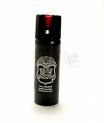 |
SUMMIT COUNTY, Ohio — An array of autopsy photos in the case of Summit County Jail inmate Mark D. McCullaugh Jr. showed his windpipe was so badly burned from inhaling streams of pepper spray that it ''clearly resulted in respiratory impairment’’ and, ultimately, led to his death, a medical examiner’s official said Monday.
George Sterbenz, the county’s chief deputy medical examiner and the man who performed the autopsy, was the only prosecution witness to testify on the first day of the trial of sheriff’s Deputy Stephen Krendick — one of five deputies indicted in McCullaugh’s death.
Sterbenz testified that all of the chemical burns to McCullaugh’s body — shown in minutely detailed photos of his head, eyes, back, chest, arms, hands and legs — occurred while he was handcuffed and shackled in a ''hogtie position.’'
At that point, prosecutors said as they described the 2006 struggle with McCullaugh in his cell in the jail’s mental health unit, he was ''not a threat to anyone, including himself.’'
Krendick, 35, is facing one count of murder in a bench trial before visiting Judge Herman F. Inderlied Jr. of Geauga County, who was appointed by the Ohio Supreme Court to handle the case.
If Krendick is convicted of that charge, he could face a prison sentence of 15 years to life.
Defense attorney James M. Kersey of Cleveland, one of two lawyers representing Krendick, attempted to counter the autopsy evidence in his opening statement, contending that McCullaugh was ''morbidly obese,’' suffered from extremely high blood pressure and died from ''stress’’ brought on by a condition known as ''excited delirium.’'
Scientific experts for the defense, Kersey said, will testify that McCullaugh’s death was ''brought on by an exacerbation of his heart disease.’'
Excited delirium is a trial term used to describe the deaths of suspects who are in police custody and are highly agitated or under the influence of drugs.
McCullaugh, 28, was taken to Akron General Medical Center after the struggle. He was pronounced dead at 7:46 p.m. on Aug. 20, 2006, Sterbenz said.
Spray overwhelms staff
The next day, when McCullaugh’s body was brought to the medical examiner’s North Summit Street office at 6:30 a.m., Sterbenz said the pepper spray residue on McCullaugh’s body was ''overwhelming’’ to his staff.
''It was preventing my morgue staff from performing their duties to prepare the body’’ for the autopsy, Sterbenz told the judge.
McCullaugh, according to Sterbenz, was 6-foot-2 and weighed about 290 pounds.
Jennifer L. Fox, McCullaugh’s mother; his brother, Jonathan Stock of Medina; and his grandfather, Larry Bates of Brook Park, were seated in the front row of the public gallery but declined to comment.
The family’s lawyer, Terry H. Gilbert of Cleveland, said it would be inappropriate for them to comment with a wrongful death lawsuit on behalf of McCullaugh’s estate pending in federal court in Akron.
Gilbert, however, sat alongside the family throughout the three-hour presentation of autopsy photos and later described it as ''horrifying.’'
''The number of injuries from blows and chemical spray was just remarkable,’' Gilbert said outside of court. ''And what was interesting was that the pattern of the chemical flow demonstrated that Mark was hogtied.
''The natural question,’' Gilbert added, ''was why did they do this when he was totally restrained?’'
Assistant Cuyahoga County Prosecutor John R. Kosko, who was named by his office to handle the case after Summit County Prosecutor Sherri Bevan Walsh cited concerns over possible conflicts of interest, said in his opening statement that McCullaugh also was assaulted by Krendick and several of the other indicted deputies before being pepper-sprayed.
''Mark McCullaugh was assaulted, literally, from the top of his head down to his ankles,’' Kosko told the judge.
Move attempt cited
Attempting to counteract that assertion, Kersey said defense evidence will show that those injuries occurred when the deputies attempted to move McCullaugh from his cell and dropped his body ''at least once, perhaps twice, hitting various parts of his body, including his head, face, neck, ears.’'
In other developments, Kersey tried unsuccessfully to prevent Kosko from making any mention of a police nightstick or baton as the alleged cause of an anal injury that Kosko said McCullaugh suffered during the struggle.
Summit County Medical Examiner Lisa J. Kohler, who originally ruled the death a homicide, said autopsy findings showed the cause of death was asphyxiation from multiple forms of restraint and blows — including an unspecified anal injury.
But before opening statements, Kersey told the judge that he could not find anyone in the prosecution’s file of evidence who saw Krendick or any of the other deputies using a nightstick on McCullaugh.
''It doesn’t exist,’' Kersey argued. ''There is no evidence about somebody doing that.’'
Kosko said the issue arose during grand jury testimony when Sterbenz was asked for his opinion about what might have caused the anal injury.
Inderlied then denied the defense motion to eliminate mention of the anal injury, saying he would rule on the matter if it is raised during the remainder of trial proceedings.
Copyright 2008 Akron Beacon Journal